
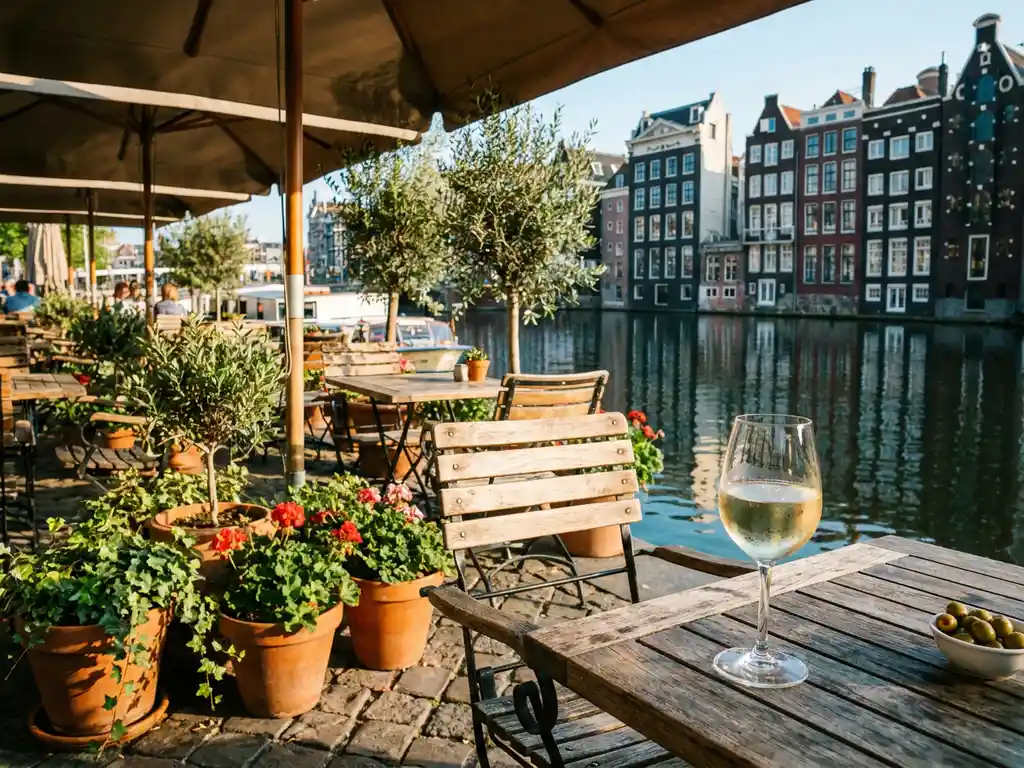
A great outdoor terrace in Amsterdam is more than a few chairs on the street. It’s a place where you feel the pulse of the city, unwind, and end up staying longer than you planned. But what actually makes a terrace truly great? Whether you’re looking for a sunny spot for lunch or a cozy evening outside, there are certain qualities that set a terrace in Amsterdam apart from the rest. In this article, we break down the eleven most important ones.
What Amsterdammers Look for in an Outdoor Dining Experience
Amsterdammers have high standards when it comes to sitting outside. They want comfort, atmosphere, and a good reason to stay. A terrace isn’t an afterthought — for many restaurants, it’s the first impression guests get. Expectations are high, and rightly so. Understanding what guests are looking for is how you build a terrace that truly delivers.
The qualities listed below aren’t luxury extras. They are the building blocks of an outdoor dining experience that stays with people and brings them back. From the right location to a distinctive identity — every element counts.
1: A Location That Invites You to Stay
The setting of a terrace largely determines its atmosphere. A terrace that is sheltered, offers views of greenery or water, or is situated in a lively but not overwhelming environment naturally encourages guests to linger.
Terraces in Amsterdam that do well are often located just off the busiest tourist routes. Think of a quiet side street, a courtyard, or a waterfront spot. That combination of accessibility and tranquility is worth its weight in gold.
Guests who deliberately choose a terrace aren’t just there for the food or drinks. They’re there for the experience of the surroundings. A great location is therefore the foundation of any good outdoor restaurant in Amsterdam.
2: Comfortable Furniture for Every Season
Wobbly chairs and tables that are too small can ruin the terrace experience immediately. Comfortable furniture is one of the most underrated factors in outdoor dining, yet guests notice right away when it’s lacking.
In Amsterdam, where the weather is unpredictable, investing in seating that remains pleasant even on cooler days is a smart move. Think cushions, sturdy chairs with backrests, and tables at the right height. Patio heaters and windbreakers make the difference between a terrace that only works in summer and one that stays inviting throughout the season.
Guests who are comfortable tend to order a second drink and stay longer. Good furniture isn’t just a matter of hospitality — it’s also smart business.
3: Atmospheric Lighting After Sunset
A terrace that looks beautiful during the day but feels dark and bare in the evening is missing a huge opportunity. Atmospheric lighting after sunset transforms a terrace into a place people actually want to go, even on a weeknight.
Warm lights, lanterns, string lights, or subtle spotlights nestled in the greenery create an inviting atmosphere without feeling harsh or overly commercial. The goal is for guests to feel at ease, even well after the sun has gone down.
Lighting is one of the most affordable ways to enhance the appeal of a terrace, yet it’s overlooked in many places. A well-lit terrace in Amsterdam draws guests in, even outside of peak hours.
4: A Menu Suited to Outdoor Dining
Eating outside calls for a menu that fits the experience. Dishes that cool down quickly, require too many utensils, or are difficult to share don’t lend themselves well to terrace dining. A great terrace offers a selection that is practical without compromising on quality.
Think light lunches, share plates, snacks, and drinks that match the relaxed outdoor vibe. An international and adventurous menu works well on a terrace, as guests are in a laid-back mood and open to trying new flavors.
The best terraces in Amsterdam offer a menu specifically tailored to the outdoor setting. That gives guests the sense that real thought has gone into the experience.
5: Fast and Attentive Service Outside
Serving guests on a terrace is logistically more challenging than indoors, yet guests still expect the same level of attention and speed. A terrace where you wait a long time before your order is taken quickly loses its appeal.
Attentive outdoor service means staff actively circulate, make eye contact, and proactively check whether everything is to guests’ liking. That requires good organization and sufficient staff during busy periods.
Guests who are helped quickly and warmly feel genuinely welcome. That sense of hospitality is one of the strongest reasons people recommend a terrace to others.
6: A Sound Environment That Encourages Relaxation
A terrace on a busy arterial road or next to a construction site loses points, no matter how attractive the décor. The sound environment has a direct impact on how relaxed guests feel.
Background music that fits the terrace’s atmosphere, a location sheltered from street noise, or greenery that absorbs sound — all of these factors contribute to a pleasant acoustic environment. It’s not about silence; it’s about the sound being agreeable.
Terraces that are intentional about sound create a space where conversations flow effortlessly and guests can truly unwind. That is exactly what sets a great terrace in Amsterdam apart.
7: Greenery and Natural Elements in the Design
Plants, flowers, wooden furniture, and other natural materials make a terrace feel warmer and more inviting. Greenery on a terrace gives guests the sense of escaping the city, even when they’re right in the middle of Amsterdam.
Vertical gardens, planters used as dividers, or trees that provide shade — there are many ways to incorporate nature into a terrace design. It not only improves the visual appeal but also creates a more comfortable temperature on warm days.
Terraces with green elements score well on social media and are recommended more often. It’s an investment that pays for itself in visibility and guest experience.
8: Child-Friendliness and Accessibility
A terrace that is accessible to everyone reaches a broader audience. Families with children, guests with strollers, or visitors with disabilities — they all consciously choose places where they feel welcome and at ease.
Practical considerations such as sufficient space between tables, a level surface, and the availability of high chairs make a significant difference. A child-friendly terrace doesn’t need to be specially designed for children — it’s about basic comfort and a welcoming attitude.
Terraces that pay attention to these details build a loyal customer base. Families come back when they know they’re welcome.
9: A Dog-Friendly Policy as a Distinguishing Factor
Amsterdam is a true dog city. Many residents take their dogs everywhere and deliberately choose venues where their four-legged companions are welcome. A dog-friendly terrace is therefore a genuine differentiator.
Water bowls, enough space for dogs under the table, and a friendly attitude from staff toward dogs — these are small gestures that make a big difference. Guests with dogs greatly appreciate not feeling like they’re an inconvenience.
In 2026, being dog-friendly is increasingly a deliberate choice made by terraces that know their audience well. It’s a simple way to stand out from the competition.
10: A Recognizable Identity and Character
The best terraces in Amsterdam have a clear story. Whether it’s an international concept, a local neighborhood spot, or a design terrace on the waterfront — a recognizable identity means guests know what to expect and choose it deliberately.
That identity runs through everything: the décor, the menu, the music, the staff’s attire, and the way guests are greeted. A consistent concept gives guests a sense of familiarity and trust.
Terraces without a clear identity get lost in Amsterdam’s crowded landscape. A strong identity isn’t a luxury — it’s a necessity for any outdoor restaurant in Amsterdam that wants to stand out.
11: Reservation Options and Flexible Opening Hours
Guests planning a terrace visit for a birthday, a business lunch, or a summer evening with friends want certainty. The ability to make a reservation — even for a terrace — is a major plus. It lowers the barrier and increases the likelihood that guests will actually show up.
Flexible opening hours are equally a distinguishing factor. A terrace that opens early for coffee and welcomes guests late into the evening caters to the varied needs of both Amsterdammers and visitors.
Online reservation options via the website or a booking platform make the process even more accessible. Guests who can easily book a table do so more often and return sooner.
The Terrace as an Extension of a Great Restaurant
A terrace is never a standalone element. It is an extension of what happens inside — the kitchen, the atmosphere, the people, and the story of the restaurant. The eleven qualities above show that a great terrace in Amsterdam requires attention to every detail, from the location to the lighting, and from the menu to accessibility.
Terraces that combine all of these elements create an experience that stays with guests and brings them back. They get recommended, shared on social media, and woven into the regular routines of Amsterdammers. That is what elevates a terrace from good to unforgettable.
How The Traveller Amsterdam Makes Your Terrace Visit Complete
We know exactly what a great terrace requires, because we put it into practice every day. At The Traveller Amsterdam, we combine all of the qualities described above into a concept that takes guests on a culinary journey around the world — outdoors included. Our terrace isn’t just a place to sit: it’s part of a complete experience.
- Location: Our locations in Zuidoost and the Rivierenbuurt offer a green, inviting environment that makes you want to stay.
- Menu: Our selection of share plates, international dishes, and wines from around the world is perfectly suited to outdoor dining and sharing.
- Atmosphere: From atmospheric lighting to green elements — we make sure our terrace remains appealing well after sunset.
- Accessibility: We welcome families, dogs, and everyone looking for a warm and inviting outdoor space.
- Reservations: You can easily reserve a table, including on our terrace, so you’re guaranteed your spot.
Curious what our terrace looks like? Visit our location in Amsterdam Zuidoost or discover our terrace at The Traveller Zuid on Europaplein. Plan your visit and find out for yourself why we are one of Amsterdam’s most highly regarded outdoor restaurants.
Veelgestelde vragen
How far in advance should I reserve a terrace at a popular restaurant in Amsterdam?
For a weekday lunch, booking one to two days ahead is usually sufficient. For weekends, sunny days, or special occasions such as birthdays, it’s wise to book at least three to five days in advance, especially at popular terraces. Many restaurants in Amsterdam offer online reservations through their website or platforms such as OpenTable or TheFork, making the process even easier.
What are the best months to visit a terrace in Amsterdam?
The official terrace season in Amsterdam runs from April through October, but the true peak months are May, June, and September, thanks to pleasant weather and longer evenings. July and August are popular but also busier due to tourism. Thanks to patio heaters and windbreakers, more and more terraces are enjoyable even in the cooler months, so don’t let a slight chill put you off.
How do I know whether a terrace in Amsterdam is dog-friendly before I go?
Most dog-friendly restaurants actively mention this on their website or social media. You can also quickly check Google reviews, as guests with dogs almost always bring it up in their feedback. Not sure? Give the restaurant a quick call or send an email beforehand — a welcoming terrace will be happy to answer and will give you a good first impression of their service right away.
What are common mistakes when choosing a terrace in Amsterdam?
A common mistake is relying solely on photos on social media, which don’t always reflect the actual crowds, ambient noise, or comfort of the furniture. Many visitors also forget to consider wind direction and shade, meaning a beautiful-looking terrace can turn out to be too cold or too hot in practice. Always read recent reviews and pay particular attention to comments about service and atmosphere at the time of day you’re planning to visit.
Can a terrace in Amsterdam work well for a business meeting or drinks?
Absolutely — but choose deliberately, opting for a terrace with a calm sound environment and sufficient privacy between tables. Terraces with a clear identity and professional service are best suited for business gatherings. When making your reservation, ask whether a more secluded section is available and whether the terrace has enough shade and comfortable seating for a longer meeting.
Which terrace locations in Amsterdam are best suited for families with young children?
Terraces near parks or on the waterfront — such as in the Rivierenbuurt, Zuidoost, or around Vondelpark — are popular with families because there’s room for children to move around. When choosing, look for a level surface suitable for strollers, the availability of high chairs, and a menu with child-friendly options. A terrace with plenty of shade is an added bonus on warm summer days.
How do I tell a truly great terrace apart from one that relies solely on its location?
A terrace that coasts on its location alone often falls short when it comes to service, menu quality, and comfort. When you arrive, pay attention to the condition of the furniture, how attentive the staff are, and how consistent the terrace’s look and feel is with the rest of the restaurant. A terrace that is well-maintained and well-attended even on overcast days or quiet evenings is a reliable sign of quality.
Gerelateerde artikelen
- Welke locatie is geschikt voor een eindejaarsdiner met een groep?
- Wat is het verschil tussen een vergaderlocatie en een evenementenlocatie in Amsterdam?
- Wat zijn de beste culinaire restaurants aan de Zuidas voor een bedrijfsdiner?
- 9 eetplekken in amsterdam zuidoost die ook populair zijn bij internationale bezoekers
- Hoe reserveer je een tafel bij een restaurant in Amsterdam Zuidoost?